

 Deutsch
 Español
 Français
Call us
+86-18023576732
+86-0579-89008006
Fax: +86-0579-82206899

Our team is proud to offer on time guarantee and product guarantee to customer satisfaction.
Read MoreChoosing the appropriate Electric Wheelchair Gear Motor is essential for ensuring safe, efficient, and reliable wheelchair operation. The motor must accommodate both the user’s weight and the desired speed, providing adequate torque for inclines, smooth acceleration, and consistent performance. Understanding how load and speed requirements interact with motor specifications allows users and manufacturers to optimize mobility while maintaining battery efficiency and long-term durability.
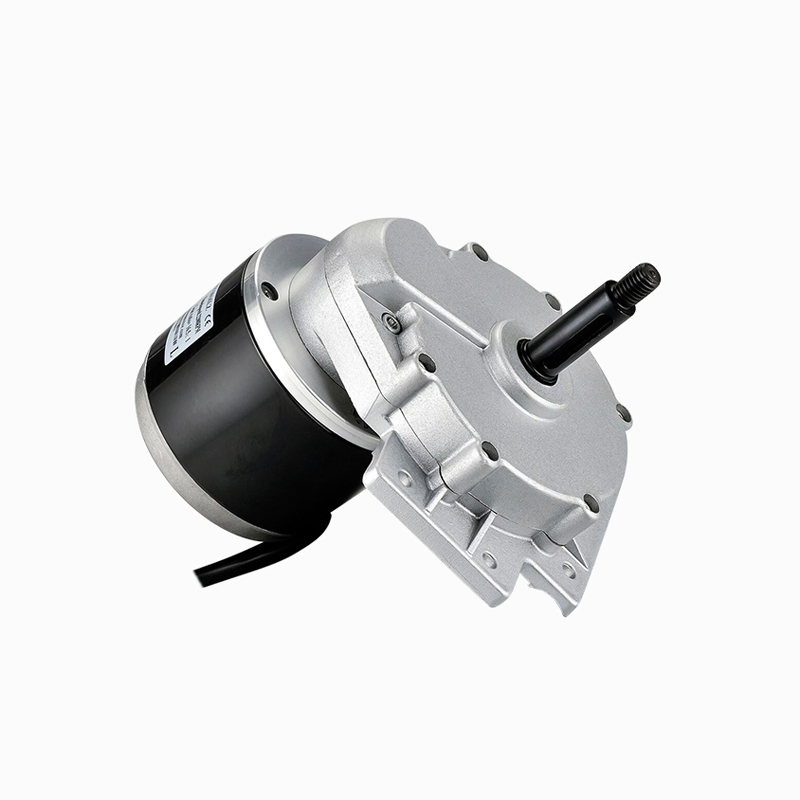
The weight of the user, plus any additional cargo, directly affects the motor’s torque demand. Heavier loads require more torque to overcome gravitational and frictional resistance, especially when climbing slopes or navigating uneven terrain. A motor that is underpowered for the intended load may struggle to move the wheelchair efficiently, causing slower speeds, increased battery consumption, and potential motor overheating. Therefore, accurately assessing the total load is a crucial step in motor selection.
Speed requirements influence both user experience and motor performance. Some users prioritize faster travel for daily mobility, while others may need precise control at slower speeds for indoor navigation or safety reasons. Higher-speed motors require careful matching with torque and battery capacity to avoid rapid energy depletion. Conversely, motors optimized for slower speeds can provide higher torque for climbing or carrying heavy loads without overloading the system. Balancing speed and torque ensures that the wheelchair operates efficiently in all typical scenarios.
Matching Motor Specifications to Load and Speed
When selecting a motor, the gear ratio, rated voltage, and power output must be considered in conjunction with load and speed requirements. A higher gear ratio reduces output speed but increases torque, making it suitable for heavy loads or steep inclines. Lower gear ratios allow faster movement but provide less torque, ideal for lighter users or flat terrain. The rated voltage and power output should also correspond to the battery system to maintain efficiency and prevent excessive wear.
The environment in which the wheelchair will be used affects motor selection. Outdoor or mixed-terrain use requires motors capable of handling frequent slopes, bumps, and obstacles, demanding higher torque and robust construction. Indoor use on smooth surfaces may allow lower-torque, higher-speed motors without compromising performance. Considering typical terrain and usage patterns ensures that the motor delivers consistent performance without overstraining components.
Selecting the right Electric Wheelchair Gear Motor involves a holistic assessment of load, speed, battery capacity, and terrain. Consulting manufacturer specifications, user reviews, and professional guidance can help identify motors that meet performance and reliability requirements. Testing the motor in real-world conditions before finalizing the selection is also recommended to ensure that acceleration, speed, and climbing ability match user expectations.
Choosing an appropriate motor for an electric wheelchair requires careful consideration of both load and speed requirements. Higher loads necessitate greater torque, while desired speeds must be balanced with energy efficiency and battery capacity. Gear ratio, power output, and terrain conditions all influence performance and should guide the selection process. By carefully analyzing these factors, users and manufacturers can select an Electric Wheelchair Gear Motor that provides reliable, safe, and efficient mobility across a variety of conditions.

+86-18023576732
+86-0579-89008006
Fax: +86-0579-82206899


Bailongqiao Dongxi Industrial Zone, Wucheng District, Jinhua, Zhejiang, China.
On weekdays, we will reply to you or call us within 12 hours after receiving the inquiry.
Understanding Temperature Effects on Brushless Motor Barrier...
Understanding Torque and Load in Electric Wheelchair Gear Mo...
Copyright © Zhejiang Norton Motor Co., Ltd. All Rights Reserved.

Custom DC Reduction Motor Factory

Contact Us