

 Deutsch
 Español
 Français
Call us
+86-18023576732
+86-0579-89008006
Fax: +86-0579-82206899

Our team is proud to offer on time guarantee and product guarantee to customer satisfaction.
Read MoreWhen evaluating why a DC Gear Brushed Motor might exhibit jitter or intermittent motion during operation, it is necessary to analyze both electrical and mechanical causes. Jitter often arises from inconsistent torque output, irregular current supply, uneven gear meshing, or friction buildup inside the transmission system. Because these motors are widely used in robotics, smart locks, vending mechanisms, and small automation devices, any instability in motion can directly affect performance accuracy and long-term reliability. Identifying the origins of jitter is the one step toward designing a stable and smooth-running drive system.
Electrical instability is one of common causes of jitter. If voltage fluctuates, torque output will vary, causing inconsistent rotational behavior. Using a regulated power supply with sufficient current margin helps prevent sudden drops that could interrupt motor motion. Adding capacitors near the motor terminals can also buffer transient voltage dips and reduce electrical noise. For systems driven by battery power, choosing cells with higher discharge capability ensures that the motor receives consistent current during high-load or startup conditions. Smooth electrical delivery directly translates into smoother mechanical performance.
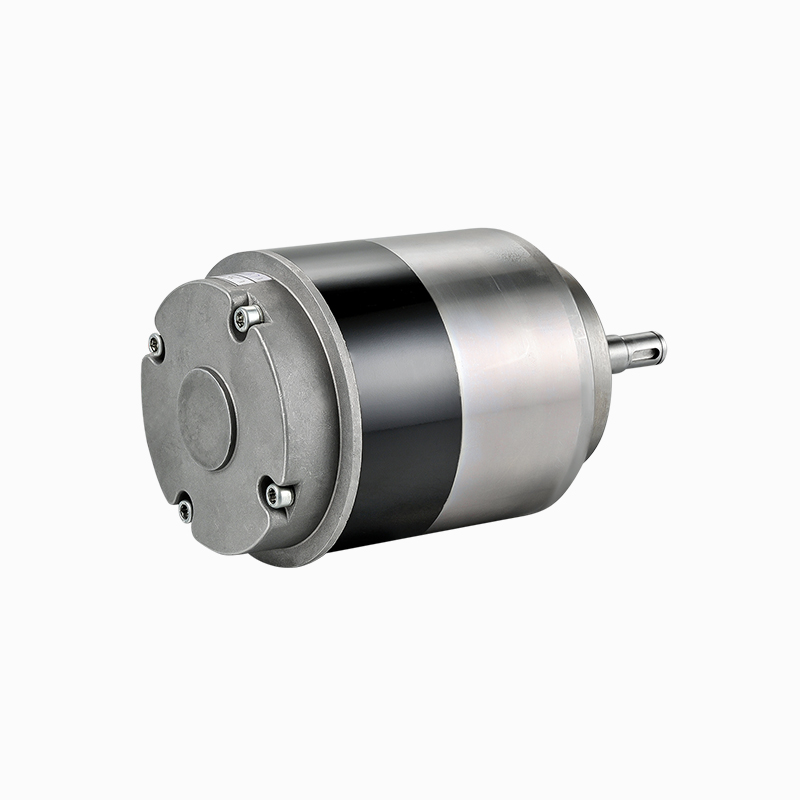
Many motion irregularities originate from the mechanical transmission rather than the motor itself. Insufficient lubrication, worn gears, or debris inside the gearbox can obstruct rotation. Applying high-quality lubricants reduces internal friction and prevents gear teeth from sticking when load increases. Gearboxes made from low-precision materials may develop backlash or wear quickly, increasing the likelihood of jitter. Selecting precision-cut gears, hardened materials, and tight tolerance assemblies ensures smoother torque transfer. Regular maintenance, including cleaning and re-lubrication, helps preserve gearbox consistency throughout long operating cycles.
Improper installation can induce unwanted vibration. If the motor shaft is misaligned with the driven mechanism, side-loading may create friction points that disrupt rotation. Firm and stable mounting brackets reduce micro-vibrations that can amplify jitter under load. Using rubber dampers or vibration-absorbing mounts helps isolate the motor from structural resonance in the surrounding equipment. Ensuring that the output shaft is not subjected to excessive radial stress will result in smoother torque delivery and reduced mechanical resistance.
Because brushed motors rely on mechanical commutation, uneven brush wear or poor brush contact can cause inconsistent torque pulses. Ensuring that brushes are made from suitable materials for the application environment helps maintain stable electrical contact. If the commutator surface becomes dirty or worn, periodic cleaning or resurfacing can significantly reduce jitter. Higher-precision motors often use better brush geometry and improved spring pressure to ensure consistent commutation under varying loads.
Excessive or sudden load changes can cause temporary stalling or jerky motion. Designing the driven mechanism to distribute the load evenly and reduce torque spikes is essential. Adding a small flywheel or increasing gear ratio can smooth out torque fluctuations by providing more mechanical leverage. Systems requiring frequent starts and stops may benefit from soft-start control strategies that gradually ramp up torque instead of applying immediate full current. These methods help prevent abrupt transitions that might cause the motor to hesitate or jerk.
Advanced driver circuits and PWM controllers can regulate speed and torque more precisely, reducing motion irregularities. Closed-loop systems using encoders or Hall sensors can further improve smoothness by continuously adjusting power delivery in real time. Although brushed motors are inherently simple, adding intelligent control electronics can greatly enhance stability under varying load conditions.
Avoiding jitter or hesitation in a DC Gear Brushed Motor requires a multi-layer approach that includes clean electrical input, low-friction mechanical components, stable mounting, proper commutation, and intelligent control. When these elements are optimized together, the motor can deliver smooth, reliable performance across demanding applications, ensuring both accuracy and long-term operational stability.

+86-18023576732
+86-0579-89008006
Fax: +86-0579-82206899


Bailongqiao Dongxi Industrial Zone, Wucheng District, Jinhua, Zhejiang, China.
On weekdays, we will reply to you or call us within 12 hours after receiving the inquiry.
Understanding Temperature Effects on Brushless Motor Barrier...
Understanding Torque and Load in Electric Wheelchair Gear Mo...
Copyright © Zhejiang Norton Motor Co., Ltd. All Rights Reserved.

Custom DC Reduction Motor Factory

Contact Us